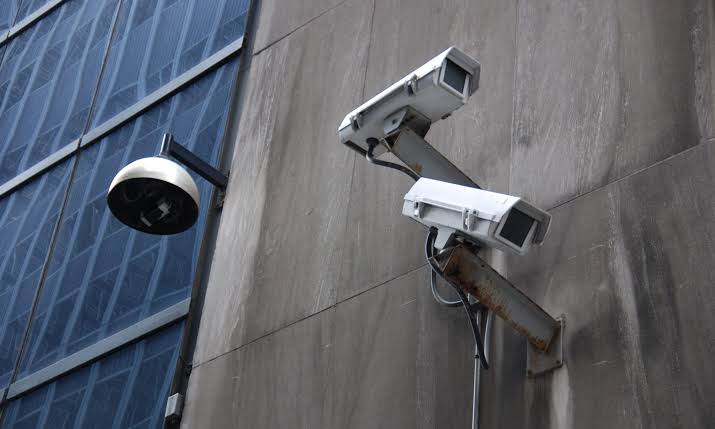
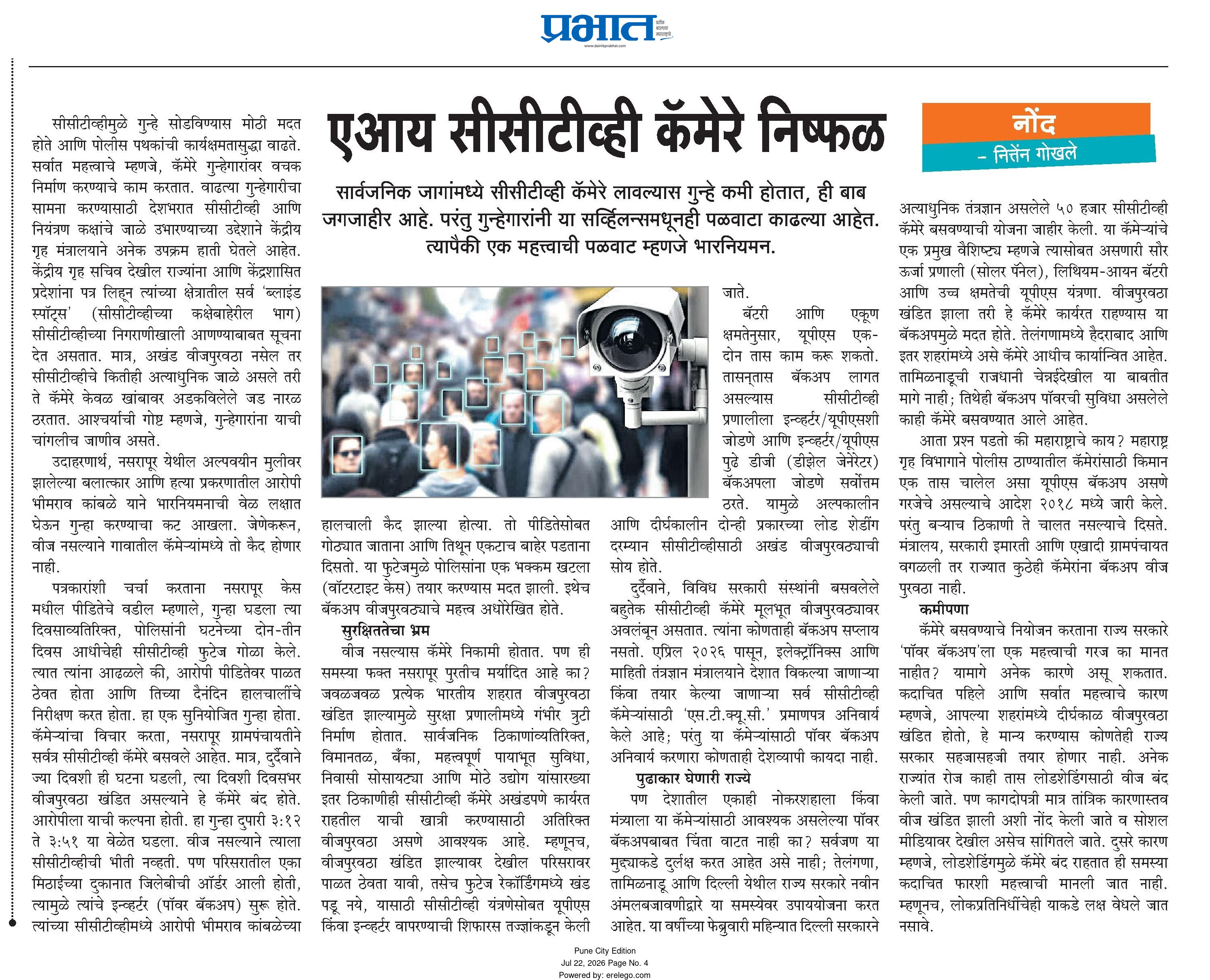
Criminals often make the best use of power cuts. Blackouts and load shedding provide the perfect cover of darkness, leaving them with zero risk of being caught on camera. Does this mean surveillance cameras without a reliable backup power supply are practically useless? Let’s find out.
The Union Home Ministry has launched several initiatives aimed at establishing a nationwide network of CCTV cameras and control rooms to combat crime. The Union Home Secretary keeps writing to states and union territories to cover all blind spots in their jurisdictions with CCTVs. Such surveillance helps in solving crimes and improves the efficiency of police units in the field. Most importantly, cameras act as a deterrent. However, without a constant power source, even the latest and most advanced AI-CCTV network becomes useless hardware. And surprisingly, criminals know this very well. For example, the convict Bhimrao Kamble, in the Nasrapur minor rape and murder case, had planned his crime in a way that the cameras in the village would not capture him due to the load shedding.
During his recent interaction with The Postman, the victim’s father said, “Besides the day the crime took place, police also gathered CCTV footage from two to three days before the incident. They noticed the culprit was snooping on the victim and monitored her daily routine. It was a well-planned crime. When it comes to security, Nasrapur Gram Panchayat has installed CCTV cameras throughout the area. However, on the fateful day, these cameras were not operational due to a day-long load-shedding power cut. And the accused knew this. The crime took place between 03:12 PM and 03:51 PM. But the sweet shop in the locality had received an order for Jalebi, and thus, they had their inverter (power backup) running. So, their CCTV was able to capture the accused, Bhimrao Kamble’s movements. He can be seen entering the cowshed with the victim and exiting it alone. This footage helped cops create a watertight case.” And this is where the significance of backup electric supply comes into the picture.
In almost every Indian city, power failures contribute to security system downtime. Thus, a UPS is recommended for CCTV systems to handle power outages, prevent recording gaps, and maintain surveillance continuity. Besides public areas, other sites like airports, banks, critical infrastructure, residential societies, and large enterprises must have a redundant power source to ensure CCTVs work continuously. UPS can work for an hour or two, depending on the battery and overall capacity. So, it is best to connect the CCTV system to an inverter/UPS, and then connect that UPS/inverter to the DG (Diesel Generator) backup. This ensures continuous power during both short and prolonged outages.
You would certainly like to know which Indian cities have cameras with an additional power source. Unfortunately, most of the CCTV cameras installed by various government agencies rely on a basic power supply and do not have extended backup. Since April 2026, the Ministry of Electronics and Information Technology (MeitY) has made STQC Certification mandatory for all CCTV cameras sold or installed in the country. But there is no nationwide legislation mandating power backups for cameras.
Not everyone is ignoring the point; state governments in Telangana, Tamil Nadu, and Delhi are addressing the issue in newer rollouts. In February this year, the Delhi government announced a plan to install 50,000 CCTVs with advanced capabilities. One of the key features in these cameras will be solar panel systems with lithium-ion batteries and high-capacity UPS systems. These features help ensure cameras remain functioning during power failures. Telangana already has hundreds of such cameras in Hyderabad and other cities. Tamil Nadu’s capital, Chennai, follows closely with a limited number of cameras with a backup power source. In Maharashtra, the state home department has made UPS backup mandatory for cameras installed inside police stations. However, most backup systems remain non-operational.
But why is it that state governments do not consider backup power as a key requirement while planning the installation of surveillance cameras? Perhaps the first and most crucial reason is that no state government would agree that its cities face prolonged power cuts. And of course, the problem is not considered significant enough to attract the attention of lawmakers.
This column’s Marathi version was published by Prabhat Daily, in their July 22, 2026, edition.
Need fresh content to engage your audience? Let Nitten help you with 100 percent human-written blog posts, articles, and press releases on a variety of topics at highly affordable rates. Don’t have a big budget for content? No worries, Nitten can still help! He can assist you with story ideas and getting the best content from AI tools like ChatGPT, Gemini, Co-Pilot, etc. Feel free to get in touch: nittengokhaley24@gmail.com
 Cyber Journal 24
Leave a comment