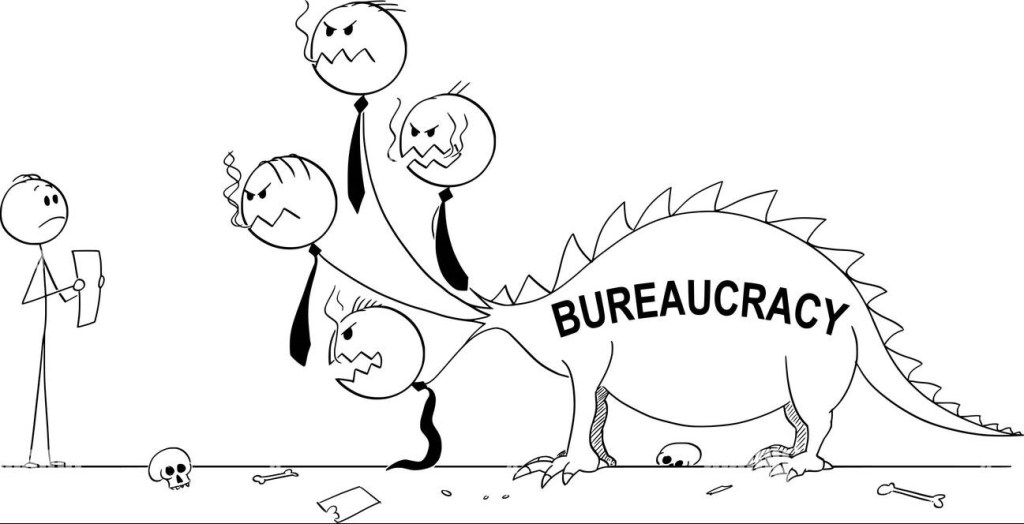
Let’s examine the key differences between the roles of a minister and a bureaucrat in India to determine who has better abilities to craft policies.
Minister Uday Samant wrote a letter to the Maharashtra State Industries Department’s Principal Secretary and CEO for MIDC. He instructed them to make key administrative decisions only after informing him. And the letter made a lot of headlines during February this year. But there was nothing wrong. It was fair and morally right for the minister to ensure all the decisions made by his department aligned with his approach. However, the issue has put one question under the spotlight. Who are better decision makers, politicians or bureaucrats?
Ministers Should Hear Bureaucrats, Not Obey
There is a clearly explained distinction between a bureaucrat and a minister’s role. Bureaucrats have years of experience and knowledge in handling day-to-day government tasks. Their job is to frame programs and policies based on the minister’s suggestions. They can prove to be good advisors and implement the minister’s policies. These officials mostly work from their offices in the state capitals. Such officials are unelected, and not directly accountable to the public. They interact with people only for a limited amount of time. That too once in a week or less.
On the other hand, ministers often remain accessible to voters for interaction. They are elected by the public and can be questioned or held accountable. Thus, ministers are in a better position to set policy directions based on ground realities.
Some of the best examples to prove the above theory are from Maharashtra. Many municipal corporations are without elected representatives. They are currently managed by administrators. And problems have only multiplied. Citizens are anxiously waiting for elections so that they can elect their representatives.
Union Territories Mismanaged by Bureaucrats
You might wonder, what is the situation in union territories like Chandigarh and Ladakh that do not have MLAs? Union Territories (except for Delhi) are run by administrators (bureaucrats). Some of them do not have elected members. And citizens living in these UTs face far more problems compared to people living in states with elected representatives. In fact, they don’t have anyone whom they can approach with their issues. Such parts of the country have become pockets of arbitrary power. Left with no other option, citizens have challenged many decisions made by administrators in courts.
Powerful Bureaucracy Becomes Unresponsive to Citizens
Case studies suggest that whenever the bureaucracy becomes too powerful, it turns unresponsive. There is often no feedback loop between people and the government in such cases.
Citizens vote to elect their representatives in the form of corporators, MLAs, and MPs to decide on their behalf. People elect someone from their city and community. So, elected representatives know the problems and opportunities in their constituencies and understand the population well. And this is democracy.
On the other hand, bureaucrats sitting in the state capital often remain away from ground realities. Thus, when such officials are allowed to make decisions and implement them without seeking input from elected representatives, there is no feedback loop left. Their decisions or policies may often face a backlash from the public due to unconstitutional decisions. And, it is the minister or representative who faces public anger for decisions that he or she did not even make.
Bureaucrats Used as a Political Tool
It is common knowledge that some officials are perceived as loyal to a particular party. They receive prestigious postings when the concerned political party comes into power. Some cases show how chief ministers use bureaucrats to influence decisions in ministries handled by coalition partners. We also know how political parties ruling the center use bureaucrats to control decisions in union territories. If the elected representative lacks knowledge and capacity, he or she ends up being a rubber stamp minister. And he won’t even know or understand how bureaucrats are taking him on a ride.
Bureaucrats Love Rubber Stamp Ministers
Rubber stamp ministers are individuals who merely endorse decisions made by senior bureaucrats. They do not independently scrutinize decisions or think about voters’ perspectives. Such ministers talk about everything under the sky except for their own ministry’s decisions. For namesake, such politicians handle multiple ministries. But they know nothing about the key decisions made by their departments.
Ministries that are a mere rubber stamp, often come up with policies that do not reflect the interests or needs of the electorate. And this erodes the public’s trust in their government. Most importantly, implementing the wrong policies can lead to a loss of business opportunities for the state.
Overall, the bureaucracy loves politicians who lack education, experience, and decision-making capabilities. And why won’t they? Most government servants are habituated to run the show.
Image Courtesy: Alamy
Need fresh content to engage your audience? Let Nitten help you with 100 percent human-written blog posts, articles, and press releases on a variety of topics at highly affordable rates. Don’t have a big budget for content? No worries, Nitten can still help! He can assist you with story ideas and getting the best content from AI tools like ChatGPT, Gemini, Co-Pilot, etc. Feel free to get in touch: nittengokhaley24@gmail.com
 Cyber Journal 24
Leave a comment